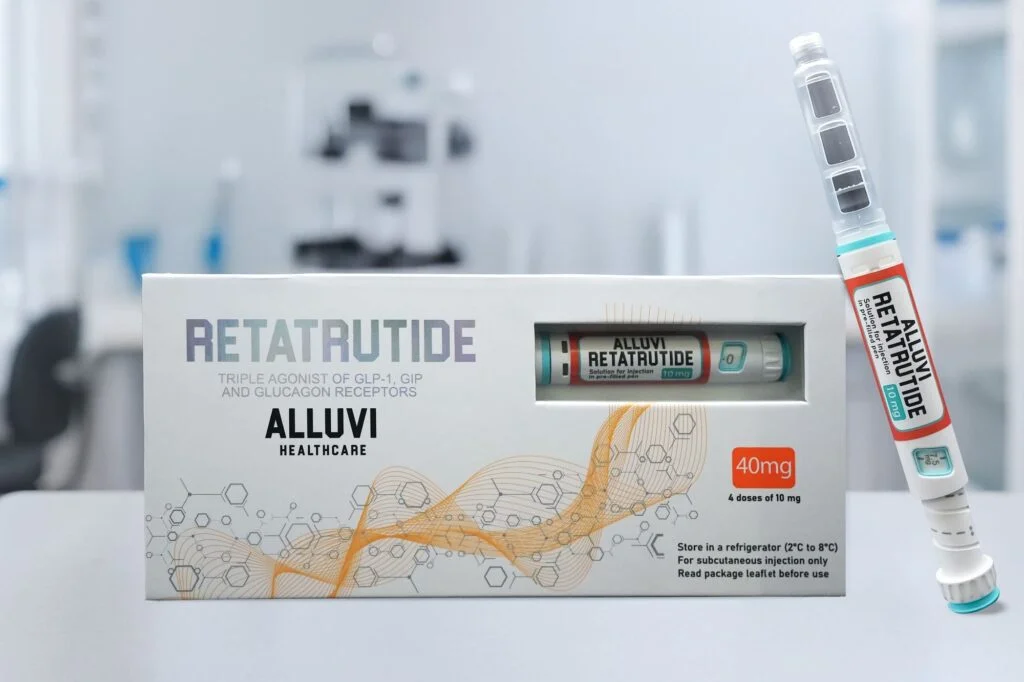
Buy Retatrutide 40mg peptide high purity online Alluvireta
Retatrutide is an investigational peptide therapy being studied for obesity, weight management, type 2 diabetes, and several metabolic health conditions. Developed by Eli Lilly and Company, retatrutide has attracted significant attention because it acts on three different hormone receptors involved in appetite regulation, energy balance, and metabolism. Unlike currently approved GLP-1 medications that target one pathway, retatrutide is designed as a triple receptor agonist that activates GLP-1, GIP, and glucagon receptors simultaneously. Current research suggests this mechanism may produce substantial weight-loss and metabolic benefits, although the medication remains under clinical investigation and has not yet received broad regulatory approval. (GLP-3 Wiki)
What Is Retatrutide?
Retatrutide is a next-generation metabolic therapy currently undergoing Phase 3 clinical trials. Researchers are evaluating its effectiveness in helping individuals with obesity and related metabolic disorders achieve meaningful weight reduction and improved health outcomes.
Key characteristics include:
- Triple hormone receptor agonist
- Investigational peptide therapy
- Once-weekly injection in clinical studies
- Designed for long-term metabolic management
- Undergoing advanced clinical testing
Researchers believe that targeting multiple pathways may enhance effectiveness compared with single-pathway therapies. (GLP-3 Wiki)
How Retatrutide Works
Retatrutide interacts with three important biological pathways:
GLP-1 Receptor Activation
GLP-1 signaling helps:
- Reduce appetite
- Slow gastric emptying
- Improve blood glucose regulation
- Increase feelings of fullness
GIP Receptor Activation
GIP may help:
- Support insulin function
- Improve metabolic regulation
- Enhance weight-management outcomes
Glucagon Receptor Activation
Glucagon receptor stimulation may:
- Increase energy expenditure
- Support fat metabolism
- Influence overall metabolic efficiency
The combination of these three actions is what makes retatrutide unique among investigational obesity therapies. (TrimRX)
Areas Being Studied
Researchers are investigating retatrutide for:
- Obesity management
- Type 2 diabetes
- Cardiovascular risk reduction
- Sleep apnea associated with obesity
- Metabolic dysfunction-associated liver disease
- Other obesity-related complications
Large clinical programs continue to evaluate these potential applications. (Retatrutide Public Source Tracker)
Clinical Trial Findings
Clinical studies have reported significant reductions in body weight among participants receiving retatrutide.
Reported outcomes include:
- Meaningful weight-loss results
- Improved metabolic markers
- Better blood glucose control
- Enhanced cardiovascular risk profiles
- Sustained benefits during long-term treatment
Researchers continue to evaluate long-term safety and effectiveness before regulatory decisions are made. (GLP3 Planner)
Potential Benefits Under Investigation
Scientists are exploring whether retatrutide may help:
- Reduce body weight
- Improve insulin sensitivity
- Lower blood sugar levels
- Improve metabolic health
- Reduce obesity-related health risks
Although early findings are encouraging, these benefits remain under ongoing investigation. (GLP-3 Wiki)
Common Side Effects Reported in Studies
Like many incretin-based therapies, retatrutide may cause gastrointestinal side effects.
Frequently reported effects include:
- Nausea
- Vomiting
- Diarrhea
- Constipation
- Abdominal discomfort
- Reduced appetite
Most reported side effects occurred during dose escalation phases of clinical trials. (Drugs.com)
Safety Considerations
Because reta remains investigational, researchers continue monitoring safety outcomes.
Important considerations include:
- Gastrointestinal tolerability
- Nutritional status during significant weight loss
- Cardiovascular monitoring
- Liver function assessment
- Long-term treatment effects
Recent health warnings regarding unapproved products sold online highlight the importance of avoiding non-regulated sources. (News.com.au)
Current Regulatory Status
As of 2026:
- Reta is not approved for general commercial use.
- It remains in Phase 3 clinical development.
- Regulatory review is still pending.
- Availability is generally limited to authorized clinical research settings.
No officially approved retail formulation currently exists. (GLP-3 Wiki)
Why Researchers Are Interested in Reta
Interest in retatrutide stems from its novel triple-agonist mechanism. Researchers hope that simultaneously targeting multiple metabolic pathways may produce:
- Greater weight reduction
- Better metabolic control
- Improved long-term outcomes
- Reduced obesity-related complications
These potential advantages continue to be evaluated in ongoing studies. (Retatrutide Public Source Tracker)
Lifestyle Factors Still Matter
Even with advanced therapies, healthy lifestyle practices remain important.
Experts continue to recommend:
- Balanced nutrition
- Regular physical activity
- Adequate sleep
- Stress management
- Ongoing medical supervision
Medication-based approaches typically work best when combined with comprehensive lifestyle support.
Future Outlook
Reta represents one of the most closely watched investigational treatments in metabolic medicine. Ongoing Phase 3 studies will help determine whether it receives regulatory approval and how it may fit into future obesity and diabetes treatment strategies. Researchers, healthcare professionals, and patients continue to monitor emerging data as clinical development progresses. (GLP-3 Wiki)
Conclusion
Retatrutide 40 mg refers to an investigational metabolic therapy currently being studied for obesity, weight management, and related metabolic conditions. Its triple-receptor mechanism involving GLP-1, GIP, and glucagon pathways makes it a unique area of scientific research. While clinical trial results have shown promising outcomes, retatrutide remains under investigation and has not yet achieved broad regulatory approval. Understanding its mechanism, research findings, safety considerations, and current status helps provide an informed overview of this emerging area of metabolic medicine. (Pure Peptide Clinic)