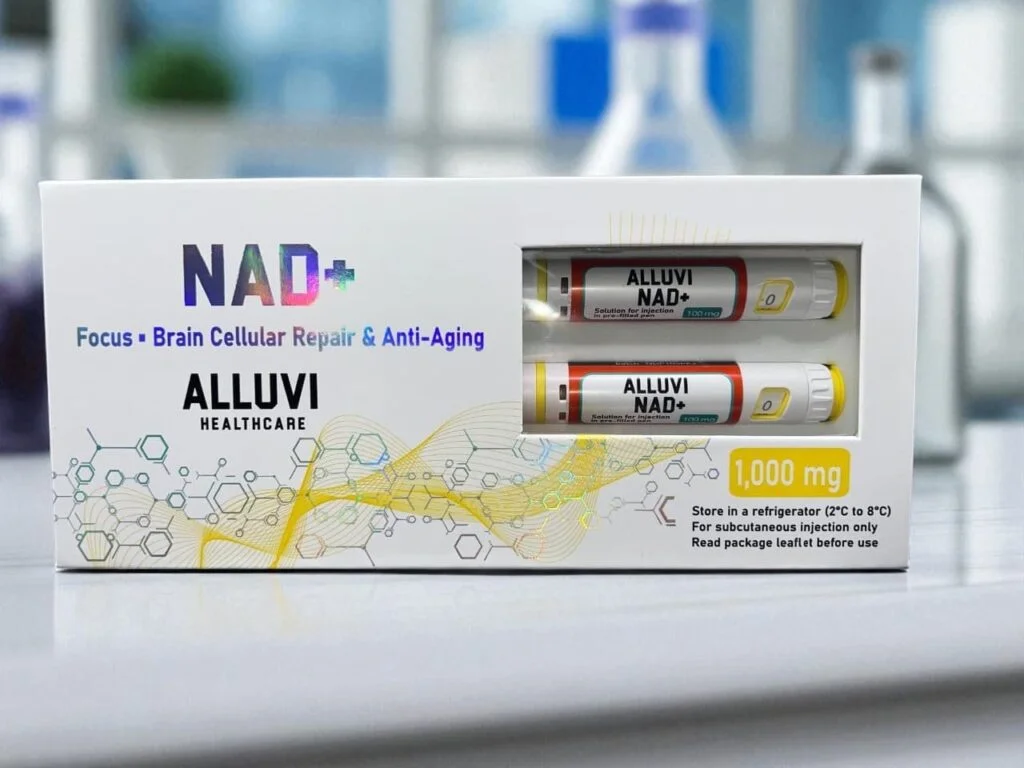
Buy NAD+ 1000mg peptide high purity online Alluvireta
NAD+ (Nicotinamide Adenine Dinucleotide) 1000 mg has gained significant attention in health, wellness, and longevity discussions due to its central role in cellular energy production. NAD+ is a naturally occurring coenzyme found in every living cell and is essential for metabolism, DNA repair, mitochondrial function, and numerous biological processes. Researchers continue to investigate how NAD+ levels influence aging, energy metabolism, and overall cellular health. Nicotinamide Adenine Dinucleotide
Interest in NAD+ has increased because studies suggest that NAD+ levels naturally decline with age, potentially affecting cellular performance and metabolic efficiency. Researchers are actively exploring whether supporting NAD+ pathways may contribute to healthy aging and improved metabolic function. (Verywell Health)
What Is NAD+?
NAD+ is a coenzyme present in all living cells. It plays a critical role in converting nutrients into usable cellular energy and supports numerous enzymatic reactions throughout the body.
Key characteristics include:
- Naturally occurring cellular coenzyme
- Essential for energy metabolism
- Involved in mitochondrial function
- Supports DNA repair pathways
- Participates in cellular signaling processes
- Required for hundreds of biochemical reactions
Without adequate NAD+, many cellular functions cannot operate efficiently. (MEDICA DEPOT)
How it Works in the Body
functions primarily as an electron carrier during metabolic reactions. It helps transfer energy derived from food into forms that cells can use.
Major biological roles include:
- Cellular energy production
- Mitochondrial function
- Redox balance maintenance
- DNA repair support
- Cellular stress response regulation
- Metabolic signaling pathways
Researchers have identified NAD+ as a critical component of pathways involving sirtuins and PARP enzymes, which are associated with cellular maintenance and repair. (MEDICA DEPOT)
Popular
Growing interest in NAD+ stems from research suggesting that cellular NAD+ levels decline with aging.
Scientists are studying its potential involvement in:
- Healthy aging processes
- Energy metabolism
- Cognitive function
- Exercise recovery
- Cellular resilience
- Metabolic health
Although interest is substantial, experts emphasize that many proposed benefits remain under investigation and require additional clinical research. (Verywell Health)
Cellular Energy Production
helps:
- Convert nutrients into ATP
- Support mitochondrial efficiency
- Facilitate oxidative phosphorylation
- Maintain cellular energy balance
- Assist metabolic reactions
Because energy production occurs in every cell, NAD+ is considered fundamental to overall cellular health. (MEDICA DEPOT)
Current Research Areas
- Aging and longevity research
- Metabolic health studies
- Neurodegenerative disease research
- Mitochondrial biology
- Exercise physiology
- Cellular repair mechanisms
While findings are promising in laboratory and animal models, human research is still evolving.
Potential Benefits Being Studied
- Improved cellular energy production
- Enhanced metabolic function
- Better mitochondrial health
- Support for healthy aging
- Improved resilience to cellular stress
However, experts caution that many claims circulating online exceed the current level of scientific evidence. (The Guardian)
Safety Considerations
As interest in NAD+ grows, healthcare professionals emphasize the importance of evidence-based decision making.
Important considerations include:
- Research remains ongoing
- Long-term effects require further study
- Product quality can vary significantly
- Claims of dramatic anti-aging effects remain unproven
- Medical guidance is recommended before beginning supplementation
Consumers should be cautious of exaggerated marketing claims
Lifestyle Factors That Support s
Several lifestyle practices may naturally influence N+ metabolism:
- Regular physical activity
- Adequate sleep
- Balanced nutrition
- Weight management
- Stress reduction
- Limiting excessive alcohol consumption
These habits support overall metabolic health and cellular function.
Scientific Perspective on Longevity
Researchers continue to investigate the relationship between N and aging. While animal and laboratory studies have generated encouraging results, definitive conclusions regarding lifespan extension in humans have not yet been established.
Current evidence suggests:
- Levels tend to decline with age
- Restoring levels may influence cellular function
- More human clinical trials are needed
Experts encourage cautious optimism while awaiting additional research. (Verywell Health)
Conclusion
refers to a quantity of Nicotinamide Adenine Dinucleotide, a vital coenzyme involved in energy production, DNA repair, and metabolic regulation. Its importance in cellular biology has made it a major focus of modern longevity and wellness research. While scientific interest continues to grow, many proposed benefits remain under investigation, and further human studies are needed to establish long-term effectiveness and safety. Understanding the role of NAD+ in cellular function provides valuable insight into one of the most actively researched areas of metabolic and healthy-aging science.